Softener Installation in Omaha Basements, Step by Step
Softener installation in Omaha is mostly plumbing judgment: where the water line enters, where the drain is, and how much finished space sits between them. A careful installer looks at all three before quoting.
A standard softener installation in an Omaha basement puts the resin and brine tanks near the main water line, adds a bypass valve, and runs a drain line with an air gap. Fixr puts labor alone at $150–$1,000 and a typical installed unit at $1,100–$3,000; a new loop adds $600–$2,000.
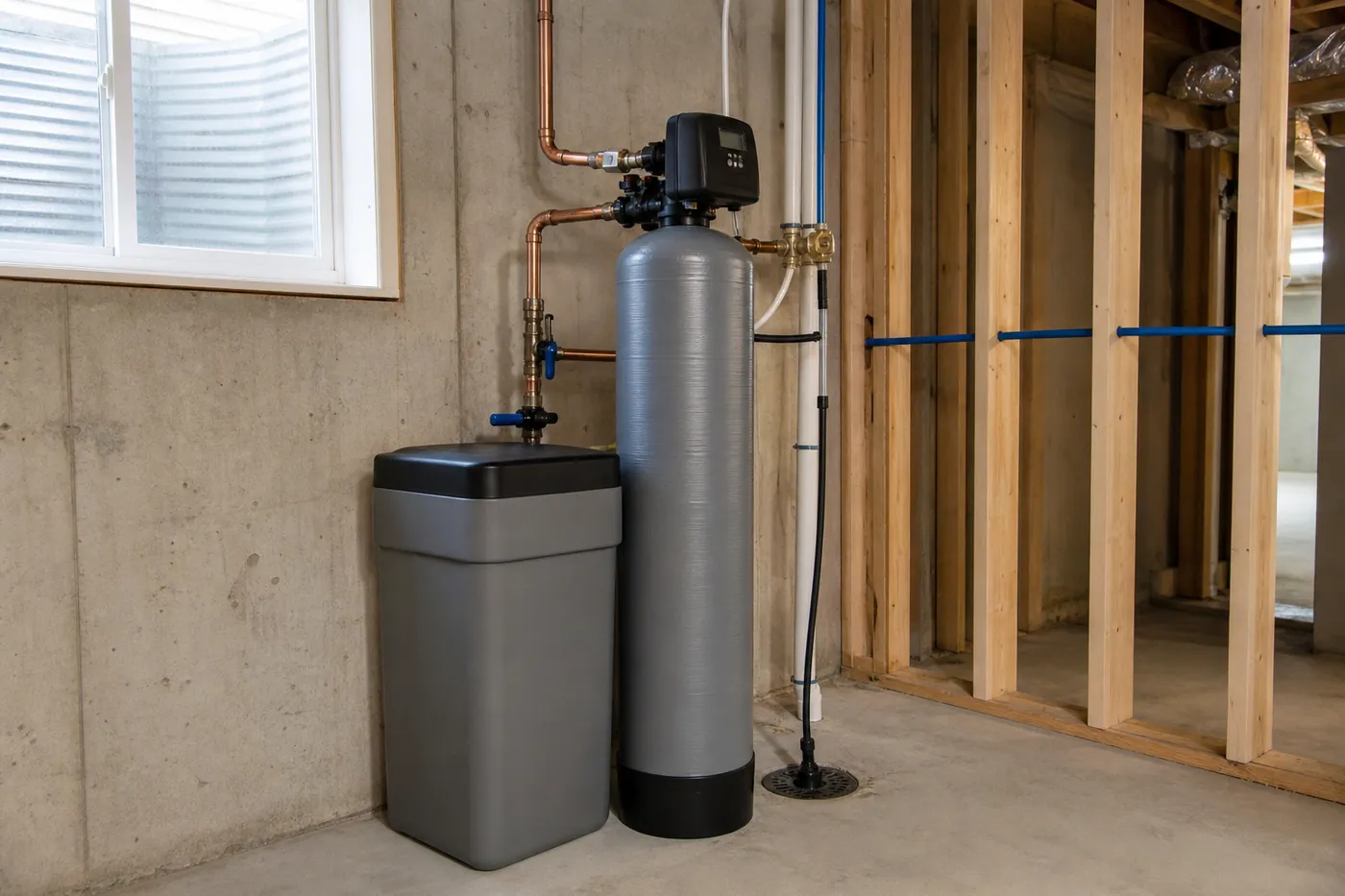
Where does the softener go?
Close to where the water service enters the house, after the meter and ahead of the water heater, so hot water is softened too. In Nebraska, 69% of homes have a basement (U.S. Energy Information Administration, 2024), and that is the usual spot: a level floor, out of the cold, with a floor drain or laundry standpipe within reach. A garage works only where the pipes cannot freeze.
What happens on installation day?
- Shut-off and cut-in. The water is turned off and the main line is cut to add the softener loop, unless the house already has one.
- Bypass valve. A three-valve or built-in bypass takes the softener out of service without shutting off the house. M.U.D. suggests switching to bypass first if pressure suddenly drops.
- Outdoor taps. Hose bibs are often left on hard water, since lawns do not need softened water and salt costs money.
- Drain line. Regeneration water goes to a floor drain or standpipe. M.U.D.'s water quality report asks owners to make sure softener drain lines keep an adequate air gap above the drain, as backflow protection.
- Setup. The installer fills the brine tank, sets the hardness and the regeneration time, and runs a first cycle.
Who is allowed to install it in Omaha?
Omaha licenses the people who do this work. Its plumbing code sets separate water conditioning contractor and installer licenses: the contractor exam calls for four years of practical experience installing and sizing water conditioning appliances, and the installer exam for a one-year apprenticeship plus 100 hours of approved instruction (Sec. 49-271, as printed on the Omaha Plumbing Board's exam application). Ask which license the installer holds, and ask Omaha Permits and Inspections whether a permit and inspection apply to your job.
What to check before the visit
Find the main shut-off and the nearest floor drain, measure the floor space beside the water heater, and note whether an old softener or a pair of capped pipes is already there. Read the hardness in the latest M.U.D. report or test a cold tap yourself. Then compare methods and prices in the Omaha water softener installation cost guide.
Questions homeowners ask
Can I install a water softener myself in Omaha?
Check with the city first. Omaha's plumbing code licenses water conditioning installers and contractors, so ask Omaha Permits and Inspections what a homeowner may do and whether a permit applies. If you go ahead, keep the drain air gap M.U.D. asks for, and remember that a leak at the bypass can soak a finished basement quickly.
Tell us about your water
A line is enough: crusty faucets, an old softener that quit, a house with no softener yet. One independent water treatment specialist who works in Omaha will get in touch to talk it through.