Softener Salt and Maintenance for Omaha Homes
Softener salt and maintenance take a few minutes a month and one closer look a year. Many problems blamed on a broken softener start in the brine tank.
Expect to add a 40-pound bag of salt about every six to eight weeks, at $5–$10 a bag per This Old House (2026). Softening Omaha's 9-grain water adds roughly 72 mg/L of sodium, at Nebraska Extension's rate of 8 mg/L per grain. Annual servicing runs $150–$300.
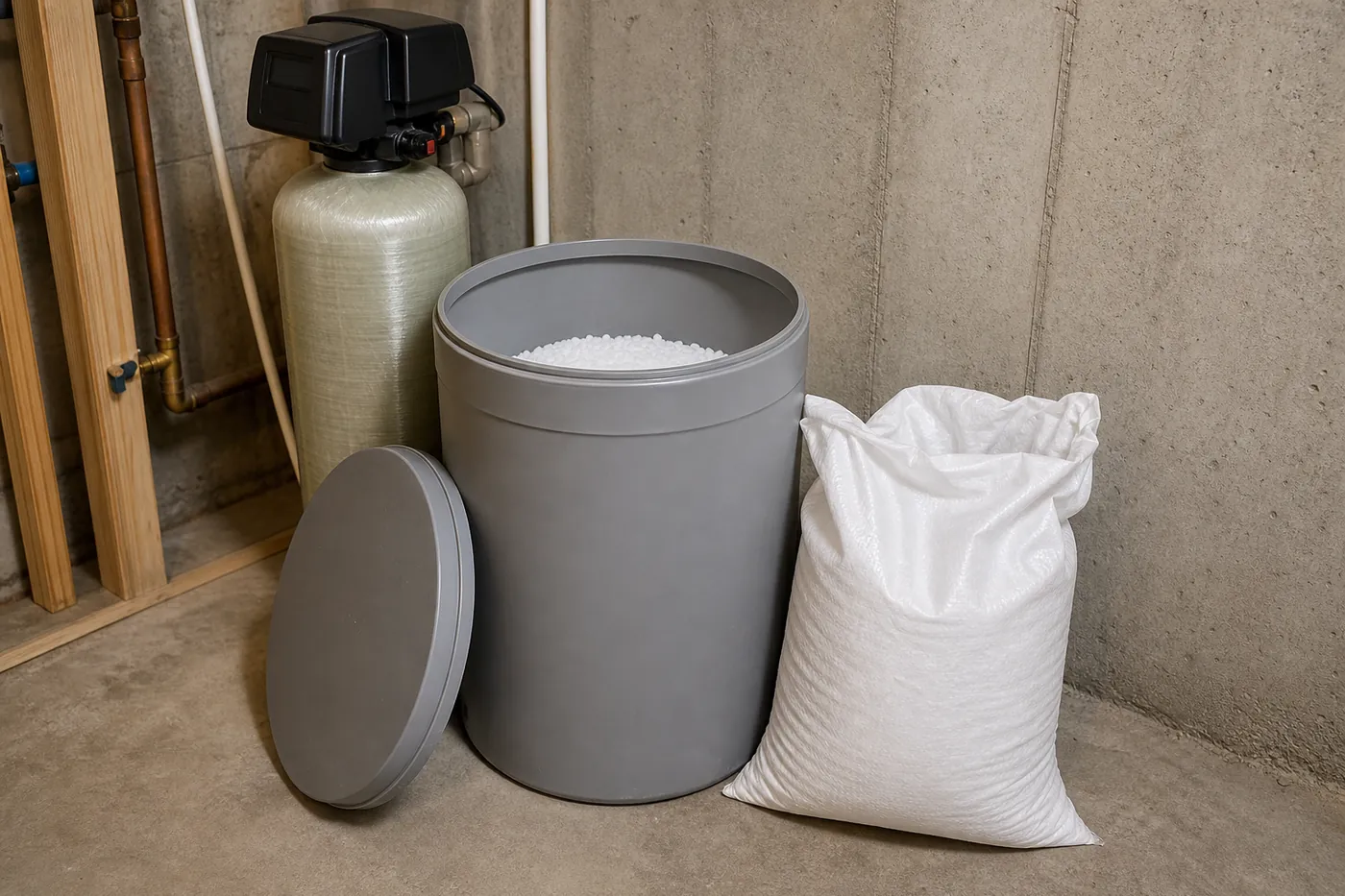
Which salt should you buy?
Nebraska Extension says most softeners use evaporated, compressed salt sold as pellets, nuggets or beads. Use block salt only in units designed for it, and rock salt only if the manufacturer allows it, because its impurities can build up in the tank. Potassium chloride can replace sodium chloride for people limiting sodium, but it costs more ($30–$40 a bag in Fixr's guide) and binds more strongly to the resin, so the softener may need more of it.
What is a salt bridge, and how do you fix one?
A bridge is a hard crust that forms across the brine tank and leaves a hollow underneath. The tank looks full, the softener regenerates with weak brine, and the water slowly turns hard again. Push a broom handle gently down through the salt; if it stops on a crust well above the bottom, break the crust up. Humid basements and a tank filled to the brim make bridges more likely, so keep the salt a few inches above the water line instead.
How much sodium does softened water add?
Nebraska Extension cites the Water Quality Association's rate of about 8 mg/L of sodium for each grain of hardness removed. At M.U.D.'s 9-grain average that is about 72 mg/L, on top of the 29 to 75 mg/L of sodium the 2025 report already lists in the tap water. People told to limit sodium can leave one kitchen cold tap unsoftened, which Nebraska Extension also mentions, or switch to potassium chloride.
The yearly check, and when to repair or replace
- Once a year: look into the brine tank, clean out sludge, and check the brine valve and float, as Nebraska Extension advises.
- After a power cut: reset the clock on a timer valve so regeneration still happens overnight.
- Hard water with salt still in the tank: a bridge, a clogged injector or tired resin. Resin fouled by iron or manganese may need cleaning or replacing (Nebraska Extension); M.U.D. water averaged only 0.06 ppm of iron in 2025, so on city water iron is seldom the culprit.
- Repair or replace: This Old House says a maintained softener can last roughly 20 years. Fixr prices a replacement at $700–$1,000; the Omaha water softener installation cost guide has the rest.
Questions homeowners ask
How often should I add salt to my softener?
Check monthly and top up when the salt drops to about a third full. This Old House says a 40-pound bag lasts most households six to eight weeks; bigger families, water near 13 grains, or a hardness setting that is too high go through salt faster. A sudden jump in salt use is a reason to check the setting.
Tell us about your water
A line is enough: crusty faucets, an old softener that quit, a house with no softener yet. One independent water treatment specialist who works in Omaha will get in touch to talk it through.